
Protecting Bone Health After Menopause
Osteoporosis (reduced bone strength with increased fracture risk) and osteopenia (lower-than-normal bone density, but not yet osteoporosis) are common in women after menopause. Bone loss accelerates in the first 5–10 years after menopause, largely due to declining oestrogen (the hormone that protects bone).
What Happens to Bone After Menopause?
Oestrogen plays a key role in maintaining the balance between bone breakdown and formation. After menopause:
- Bone resorption (breakdown) increases
- Bone formation cannot keep up
Net bone loss occurs, increasing fracture risk
Women can lose up to 10–20% of bone density in the early postmenopausal years.
The Role of Oestrogen
Oestrogen is one of the most effective therapies for preventing bone loss.
Evidence shows:
Menopausal hormone therapy (MHT) reduces fracture risk by ~30–40%
It improves bone mineral density (BMD) at the spine and hip
It is most effective when started within 10 years of menopause
Importantly, oestrogen is preventative rather than curative — it helps maintain bone and slow further loss, rather than fully rebuilding established osteoporosis.
For women 60 or within 10 years of menopause, MHT is considered a first-line option for bone protection if there are no contraindications.
Oestrogen can help bone health if initiated after the age of 60 but has to be individualised to avoid unwanted complications such as cardiovascular events.
What About Progesterone?
Progesterone (or progestogen in MHT) is primarily used to protect the endometrium (lining of the uterus) when oestrogen is prescribed.
There is limited evidence that progesterone has a significant independent role in improving bone density. Its main role remains endometrial protection rather than bone health.
Vitamin D & Calcium
Both are essential for bone health:
- Calcium supports bone structure
Recommended intake: ~1000–1300 mg/day (diet + supplements if needed) - Vitamin D helps the body absorb calcium
- Aim for levels >50 nmol/L
Supplementation often required, especially in winter or low sun exposure
Deficiency in either reduces the effectiveness of other treatments.
Exercise: The Non-Negotiable
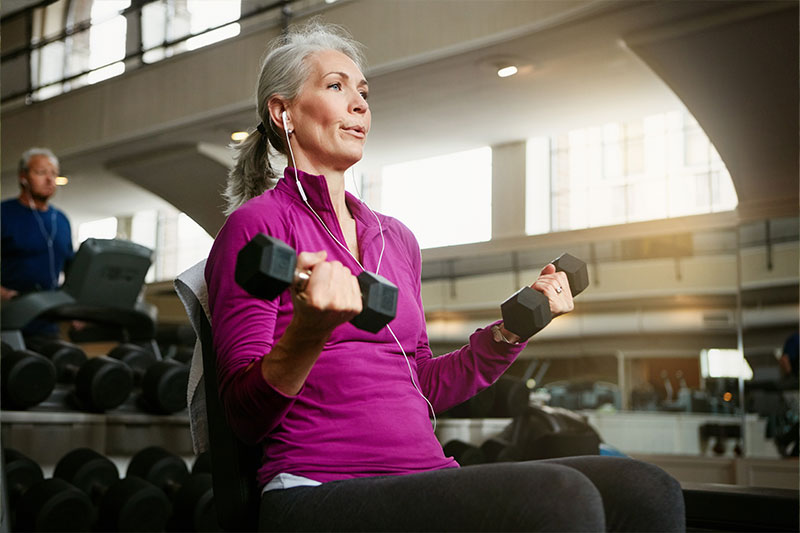
Exercise is one of the most important interventions for maintaining bone strength and preventing falls.
Best evidence supports:
- Weight-bearing exercise (walking, jogging, stairs)
- Resistance training (strength/weights)
- Impact training (where appropriate)
Exercise improves bone density modestly, but significantly reduces fracture risk by improving strength and balance.
Putting It Together
For women, bone health is best supported by a combined approach:
- Oestrogen (where appropriate) to slow bone loss
- Adequate calcium and vitamin D
- Regular weight-bearing and resistance exercise
Assessing your individual fracture risk helps you make decisions about your bone health .
Fracture Risk Calculators
Although osteoporosis indicates a high risk of fracture, many fragility fractures occur in people with bone density levels above a T-score of -2.5. Fracture risk calculators such as FRAX and GARVAN help stratify fracture risk and are used to help guide clinicians as to which patients should be commenced on osteoporosis medications.
These tools factor in a variety of established clinical risk factors including the bone density to calculate an individual’s risk of developing a major osteoporotic and hip fracture in the next 5 and 10 years. An accepted recommendation is to initiate treatment if the risk or a major osteoporotic and hip fracture is ³ 20% and 3% respectively (8).
Links to the fracture calculators can be found here: FRAX and GARVAN.
When to Consider Further Treatment or Referral
- Fragility fracture (fracture from minimal trauma)
- High fracture risk based on clinical assessment
- Inadequate response or intolerance to first-line measures
Bone health is not just about preventing fractures later, it’s about maintaining strength, independence, and quality of life now. The earlier we intervene, the more we can preserve.